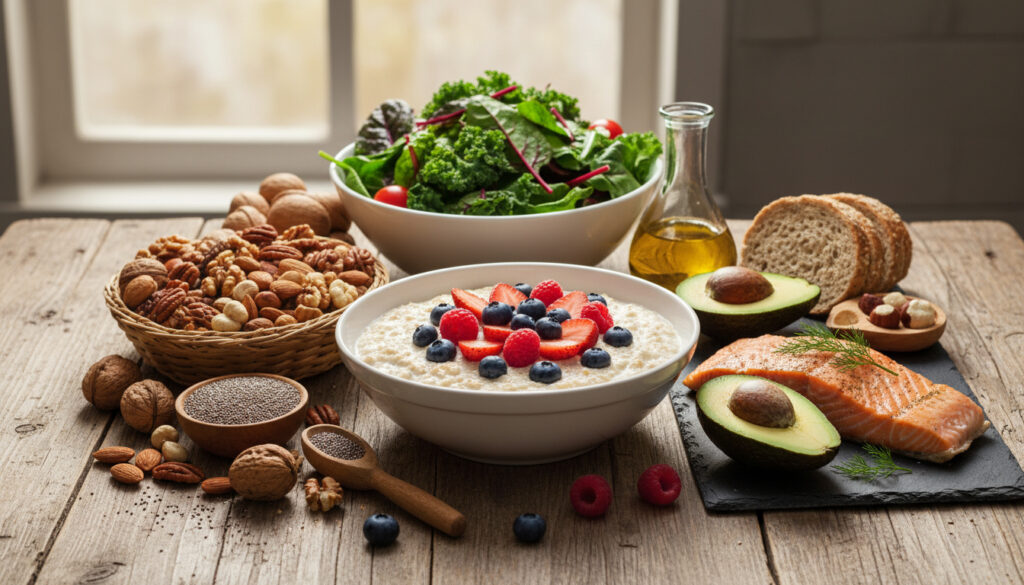
How to Lower Cholesterol Naturally – Proven Diet and Lifestyle Changes
Natural methods can lower LDL cholesterol by 4-30% without medications like statins, primarily through diet rich in soluble fiber, plant sterols, healthy fats, and lifestyle changes such as exercise, weight loss, and quitting smoking.
Evidence from systematic reviews and controlled trials demonstrates modest but consistent reductions, typically observable within three to twelve weeks. While individual responses vary based on baseline levels and adherence, dietary patterns like the Mediterranean and Ornish approaches have documented LDL declines ranging from 0% to 37%.
Medical institutions including the Mayo Clinic, Harvard Medical School, and the British Heart Foundation emphasize lifestyle modifications as first-line interventions, particularly for adults with mildly elevated cholesterol.
What Foods Lower Cholesterol and Which to Avoid?
Oats, barley, beans, and Brussels sprouts form gel-like compounds that bind cholesterol in the digestive tract.
Fortified margarines, yogurts, and nuts provide compounds that compete with cholesterol for absorption.
Olive oil, avocados, and fatty fish replace saturated fats from red meat and full-fat dairy.
Tofu, soy milk, and legumes substitute for animal proteins to reduce LDL production.
- 3.5g daily oat fiber reduces LDL by 4.2% within 3-12 weeks, according to a review of 58 trials.
- 2-3.3g plant sterols daily cuts LDL by 6-12% after approximately 4 weeks.
- 30g soy protein per day lowers LDL and triglycerides by 7-10% in individuals with baseline levels of 200-330 mg/dL.
- Dietary cholesterol from eggs has minimal impact on blood cholesterol for most people; saturated and trans fats present greater concerns.
- Unfiltered coffee contains compounds that may raise cholesterol and should be limited.
- Combined dietary interventions can achieve reductions approaching 30%.
- Colorful fruits and vegetables provide both fiber and naturally occurring phytosterols.
| Intervention | LDL Reduction | Timeline | Evidence Quality |
|---|---|---|---|
| Soluble fiber (3.5g/day) | 4.2% | 3-12 weeks | High (58 trials) |
| Plant sterols (2-3.3g/day) | 6-12% | ~4 weeks | High (124 studies) |
| Soy protein (30g/day) | 7-10% | 8-12 weeks | Moderate-High |
| Mediterranean diet pattern | 0-37% | 6+ months | High |
| Red yeast rice | Matches statins | 4-8 weeks | Moderate (20 trials) |
| Weight loss (5-10%) | Significant | 3-6 months | High |
| Regular aerobic exercise | Modest | Ongoing | Moderate |
| Smoking cessation | HDL improvement | Immediate-3 months | High |
Lifestyle Changes Like Exercise and Weight Loss
Physical Activity Protocols
Regular aerobic exercise produces modest reductions in LDL while significantly boosting HDL cholesterol. Clinical guidelines recommend at least 150 minutes of moderate activity weekly, distributed across most days. Benefits extend beyond lipid profiles to include improved vascular function and reduced blood pressure.
Weight Management
For individuals carrying excess weight, reductions of 5-10% body mass yield measurable improvements in overall cholesterol profiles. Weight loss enhances the effectiveness of dietary interventions and reduces cardiovascular risk factors independent of LDL changes.
Smoking Cessation
Quitting smoking produces immediate vascular benefits and improves HDL cholesterol levels within weeks. The cardiovascular system begins recovering from tobacco-related damage within days of cessation.
Alcohol Moderation
Cutting alcohol consumption helps prevent triglyceride elevation. Moderate intake may offer indirect benefits, but excessive drinking raises cardiovascular risks and counteracts cholesterol management efforts.
Distributing 150 minutes of activity across five days proves more effective for lipid profiles than sporadic intensive sessions. Consistency matters more than intensity for cholesterol modification.
How Long Does It Take to Lower Cholesterol Naturally?
Early Changes: Weeks 1-4
Initial dietary modifications produce detectable changes within three to four weeks. Plant sterols demonstrate 6-12% LDL reductions after approximately four weeks of consistent intake at therapeutic doses.
Measurable Results: Months 2-3
Oat-derived soluble fiber shows 4.2% LDL reductions over 3-12 week periods. Combined approaches typically yield 4-12% improvements during this window, with some individuals achieving 10% drops through strict adherence.
Sustained Maintenance: 6+ Months
Long-term adherence to Mediterranean or plant-focused patterns produces cumulative benefits, with studies documenting up to 30% reductions when multiple strategies are maintained simultaneously. Cardiovascular benefits often exceed the measured lipid improvements alone.
Effective Natural Remedies and Supplements
Red Yeast Rice
This fermented rice product contains monacolin K, chemically identical to the statin lovastatin. A 2015 review of 20 trials demonstrated LDL reductions matching conventional statin medications. However, product concentration varies, and regulatory oversight remains inconsistent.
Omega-3 Fatty Acids
Fatty fish, walnuts, and flaxseeds provide polyunsaturated fats that reduce triglycerides and blood pressure, though omega-3s do not directly lower LDL cholesterol. They support overall cardiovascular health through anti-inflammatory mechanisms.
Garlic and Botanicals
One small eight-week study showed LDL reductions with 20g raw garlic daily combined with lemon juice. Evidence for garlic remains mixed, with conflicting data across trials. Berries and mushrooms provide general heart-healthy compounds but lack specific LDL-lowering evidence.
Niacin and Other Supplements
Niacin lowers LDL but requires medical supervision due to potential side effects. Policosanol shows variable results across populations. For those interested in understanding more about cholesterol management, you can explore the HBA1C normal range UK.
Because red yeast rice contains statin-like compounds, it carries similar risks of muscle damage and liver toxicity. Consultation with healthcare providers remains essential before use, particularly for individuals already taking statins.
Supplement efficacy varies significantly by genetic factors, baseline cholesterol levels, and product quality. Natural does not automatically equate to safe or effective for all individuals.
Timeline: What to Expect Week by Week
- Weeks 1-2: Eliminate trans fats and reduce saturated fat intake; introduce oatmeal or barley for breakfast (Source: Mayo Clinic)
- Weeks 3-4: Add 2g daily plant sterols through fortified foods; establish 150-minute weekly exercise routine (Source: PMC Review)
- Weeks 5-8: Incorporate 30g daily soy protein; replace butter with olive oil; expect initial 4-6% LDL drop (Source: British Heart Foundation)
- Months 2-3: Achieve 6-12% reductions through combined fiber and sterol intake; HDL improves with consistent exercise (Source: Harvard Health)
- Month 6: Sustain 10-20% total reduction; cardiovascular risk markers improve beyond lipid levels alone (Source: PMC Meta-Review)
- Month 12: Maintain lifestyle modifications; reassess need for pharmaceutical intervention based on risk stratification
Established Facts and Remaining Questions
| Well-Established Evidence | Uncertain or Individual Factors |
|---|---|
| Soluble fiber binds bile acids and cholesterol in the gut, preventing absorption | Exact percentage reduction varies by individual baseline LDL and genetic metabolism |
| Plant sterols block intestinal cholesterol absorption through competitive inhibition | Garlic supplementation shows inconsistent results across different populations and preparations |
| Quitting smoking improves HDL and vascular function within weeks | Red yeast rice potency varies by manufacturer and batch; regulatory standards differ globally |
| Replacing saturated fats with polyunsaturated fats lowers LDL | Response to omega-3 supplementation differs between individuals with hypertriglyceridemia versus normal levels |
The Role of Natural Methods in Cardiovascular Health
Natural cholesterol reduction strategies prioritize dietary patterns and behavioral modifications over pharmaceutical interventions, particularly for patients with mildly elevated LDL between 130-190 mg/dL and low overall cardiovascular risk. Clinical evidence supports fiber intake as a primary mechanism for reducing cholesterol absorption, while exercise protocols enhance lipid metabolism and HDL production.
The distinction between dietary cholesterol and blood cholesterol remains frequently misunderstood. While eggs and shellfish contain cholesterol, dietary intake has minimal impact on serum levels for most individuals; saturated and trans fats drive LDL elevation more significantly. This understanding shifts dietary focus from avoiding eggs to eliminating processed foods and fatty meats.
High-risk patients with existing cardiovascular disease or LDL levels exceeding 190 mg/dL may require statin therapy alongside lifestyle modifications. Natural methods serve as complementary or preventive strategies rather than replacements for prescribed medications in high-risk categories.
References and Expert Perspectives
“Soluble fiber binds cholesterol in the digestive system, preventing its absorption into the bloodstream. A diet rich in oats, beans, and fruits provides the 10-25 grams daily needed for measurable impact.”
— British Heart Foundation, Heart Matters Magazine
“Lifestyle changes are the first line of defense against high cholesterol. Exercise boosts HDL and improves overall heart health, though its direct impact on LDL is modest compared to dietary changes.”
— Mayo Clinic Preventive Cardiology
“Plant sterols and stanols compete with cholesterol for absorption in the intestine. Consuming 2 grams daily can lower LDL by 5-15%, making fortified foods a practical option for those struggling to reduce cholesterol through diet alone.”
— Harvard Medical School Heart Health Bulletin
Summary: Natural Strategies to Lower Cholesterol
Lowering cholesterol naturally requires consistent intake of soluble fiber (10-25g daily), plant sterols (2-3g), and healthy fats while eliminating trans fats and reducing saturated fat consumption. Regular exercise, weight management, and smoking cessation enhance these dietary effects, producing measurable LDL reductions of 4-30% within three to twelve weeks. While supplements like red yeast rice offer additional options, consulting healthcare providers ensures safe integration with existing conditions. For personalized monitoring and risk assessment, How to Take a Screenshot on a Chromebook – Shortcuts and Fixes provides technical guidance for tracking health metrics digitally.
Frequently Asked Questions
What reduces cholesterol quickly?
Plant sterols show the fastest results, reducing LDL by 6-12% within four weeks. Combined with soluble fiber intake, initial improvements appear within three weeks.
How much does diet lower cholesterol?
Dietary interventions alone typically lower LDL by 4-30%, depending on adherence and baseline levels. Strict Mediterranean or Ornish patterns achieve the highest reductions.
Can I drink coffee if I have high cholesterol?
Filtered coffee is acceptable, but unfiltered varieties contain cafestol and kahweol that raise cholesterol. Use paper filters to remove these compounds.
Are eggs bad for cholesterol?
Dietary cholesterol from eggs has minimal impact on blood cholesterol for most people. Limiting saturated fats proves more effective than avoiding eggs.
Do natural supplements work as well as statins?
Red yeast rice matches statin efficacy, but standard supplements like garlic or omega-3s produce smaller, less consistent reductions than pharmaceutical statins.
Does losing weight lower cholesterol?
Yes. Losing 5-10% of body weight significantly improves cholesterol profiles and enhances the effectiveness of dietary interventions for LDL reduction.
How does exercise affect cholesterol?
Exercise modestly lowers LDL while significantly raising HDL. Regular activity provides cardiovascular benefits beyond measurable lipid changes. How Much Does It Cost to Charge a Tesla – 2026 Costs by Model
More related posts
 Restaurants Open Near Me – How to Find Them Right Now
 Internet Speed Test Google – How to Run, Accuracy and Results Guide
 How to Relieve Upper Stomach Pain Immediately: Fast Relief Tips
 Mr. Peabody and Sherman: Why It Flopped, Where to Watch
 25 kg to lbs – Convert 25 Kilograms to Pounds (Exact)
 How Many Cards in a Deck – 52 or 54? Suits, Ranks, History
 Utah Jazz vs Brooklyn Nets Match Player Stats & Head-to-Head
 State Farm Pay Bill: How to Pay Online, by Phone, or Mail