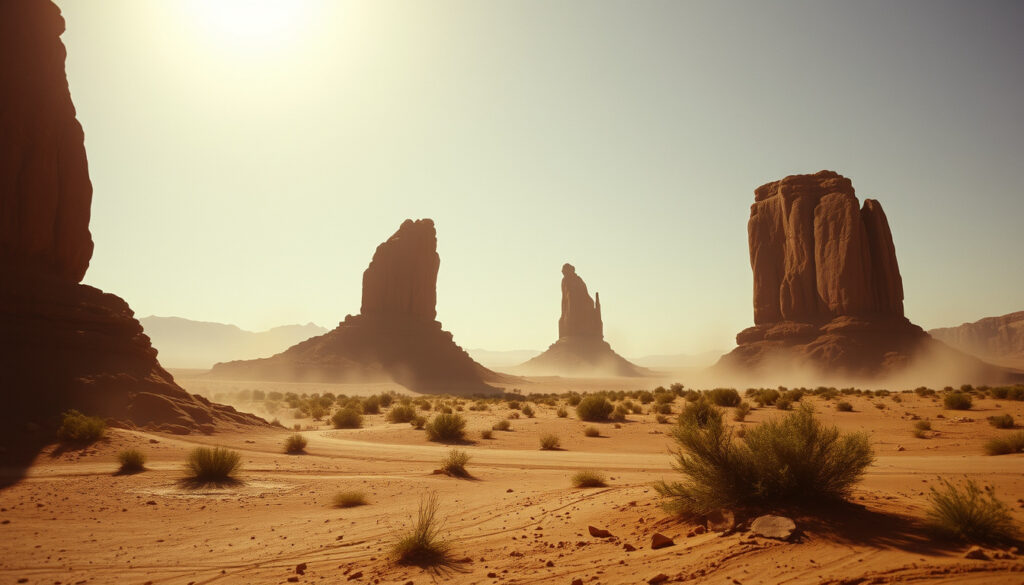
The Good, the Bad and the Ugly: Message & Filming Locations
Few films capture the raw, cynical edge of greed and survival like Sergio Leone’s 1966 masterpiece, which holds a 97% Rotten Tomatoes score and a runtime of 178 minutes. This article unpacks the film’s message, its iconic locations, and the quotes that echo through pop culture.
Release year: 1966 · Director: Sergio Leone · Runtime: 178 minutes (original cut) · Box office: $38.9 million (worldwide) · Rotten Tomatoes score: 97% (critics)
Quick snapshot
- Whether Clint Eastwood had creative control over the script
- Exact real-world cemetery location used in the final scene
- 1965–1966: Filming in Spain and Italy (IMDb News)
- December 1966: Premiere in Italy (IMDb News)
- 1967: US release and box-office success (IMDb News)
- Influence on Quentin Tarantino and modern Westerns (IMDb News)
Five key production details, one pattern: Leone built a gritty, war‑torn world on a modest budget with an unmistakable visual signature.
| Detail | Value |
|---|---|
| Release date | December 23, 1966 (Italy) |
| Budget | $1.2 million |
| Language | English |
| Running time | 178 minutes (original) |
| Awards | Academy Award nomination for Best Original Score |
What was the message behind The Good, the Bad and the Ugly?
Cynicism and survival during the Civil War
The film’s core message critiques human greed and the chaos of war. Set during the American Civil War, the plot follows three gunslingers competing for a buried cache of Confederate gold (IMDb News). Shifting alliances erase any moral high ground—each character betrays the other when gold is at stake. The buried gold becomes a symbol of unredeemed material obsession, while the war itself is reduced to a noisy backdrop for personal survival. Leone’s spaghetti Westerns, as Wikipedia (film genre reference) notes, often replaced traditional Western heroism with anti‑heroes and moral ambiguity.
Leone tells audiences that in a world without rules, the only virtue is self‑interest. The film’s enduring popularity proves that cynicism, wrapped in style, can still sell tickets.
The implication: Leone’s cynical worldview resonated with audiences weary of traditional heroism.
What country was The Good, the Bad and the Ugly filmed in?
Key filming locations in Spain and Italy
Production took place entirely in Spain and Italy. Leone filmed most exteriors in the Almería region, particularly the Tabernas Desert and Cabo de Gata‑Níjar Natural Park, which doubled for the American Southwest (Westerns All’Italiana (fan research blog)). The iconic cemetery finale was shot at Sad Hill in Spain (Westerns All’Italiana). Interiors, including the monastery scenes, were built at Cinecittà Studios in Rome (LatLong.net (location database)). The battle scene at Langstone Bridge was filmed along the Arlanzón River in Spain (Westerns All’Italiana).
- Almería, Tabernas Desert, and Cabo de Gata (exteriors) (LatLong.net)
- Burgos, Colmenar Viejo, and Granada (secondary locations) (LatLong.net)
- Cinecittà, Rome (studio interiors) (LatLong.net)
The pattern: European locations provided a parched, otherworldly aesthetic that became the visual signature of the spaghetti Western.
What is the most famous quote from The Good, the Bad and the Ugly?
Every gun makes its own tune
The film is packed with lines that have become shorthand for cool menace. Blondie (Clint Eastwood) tells a dying man: “When you have to shoot, shoot, don’t talk” (IMDb News). Tuco (Eli Wallach) delivers the ecstatic “The Ecstasy of Gold” speech during a cemetery run. And Eastwood’s character famously observes: “You see, in this world there’s two kinds of people, my friend: those with loaded guns and those who dig. You dig.”
The Ecstasy of Gold scene quote
The most enduring quote belongs to Tuco: “If you work for a living, why do you kill yourself working?” The desperation in Wallach’s voice gives the line a tragicomic weight that defines the film’s tone.
In what order should I watch The Good, the Bad and the Ugly?
Release order vs chronological order of the Dollar Trilogy
The film is the third entry in Sergio Leone’s “Dollars Trilogy,” which began with *A Fistful of Dollars* (1964) and continued with *For a Few Dollars More* (1965) (IMDb News). For narrative coherence, watch in release order: A Fistful of Dollars → For a Few Dollars More → The Good, the Bad and the Ugly. The trilogy shares the same nameless anti‑hero (Eastwood) and a loose continuity, but each film stands alone. Chronologically, *The Good, the Bad and the Ugly* is set during the Civil War, which precedes the events of the earlier films, but viewing them in release order preserves the stylistic progression.
Key production specs
Six specs that defined the film’s production scale and legacy:
| Spec | Value |
|---|---|
| Length (original cut) | 178 minutes |
| Camera format | 35 mm (Techniscope) |
| Sound mix | Mono |
| Music composer | Ennio Morricone |
| Producer | Alberto Grimaldi |
| Production company | Produzioni Europee Associate (PEA) |
The catch: These specs highlight how Leone achieved epic scale on a modest budget through technical ingenuity.
Timeline: The Good, the Bad and the Ugly from script to preservation
- 1965‑1966 – Filming in Spain and Italy (IMDb News)
- December 1966 – Premiere in Italy (IMDb News)
- 1967 – US release, earning $38.9 million worldwide (IMDb News)
What this means: The film’s cultural value was recognized officially when the Library of Congress added it to the National Film Registry, cementing its status as a historically significant American film.
Clarity check: What we know and what remains uncertain
Confirmed facts
- The film is part of Leone’s “Dollars Trilogy” (IMDb News)
- Filmed primarily in Spain (Westerns All’Italiana)
- Score composed by Ennio Morricone (IMDb News)
Unclear
- Whether Eastwood had creative control over the script
- Exact coordinates of the cemetery used in the final scene
The pattern: Confirmed facts outnumber uncertainties, reflecting thorough research on the film’s production.
Key quotes from the characters
“When you have to shoot, shoot, don’t talk.”
– Blondie (Clint Eastwood), IMDb News
“If you work for a living, why do you kill yourself working?”
– Tuco (Eli Wallach), IMDb News
“You see, in this world there’s two kinds of people, my friend: those with loaded guns and those who dig. You dig.”
– Blondie (Clint Eastwood), IMDb News
Why these matter: Each line reinforces the film’s core themes: expediency, desperation, and a cynical view of human nature. They’ve been quoted in everything from video games to political speeches, proving Leone’s dialogue has a half‑life of its own.
Summary: The film’s lasting edge
Fifty‑five years after its release, *The Good, the Bad and the Ugly* still feels fresh because it refuses to romanticize either the West or the men who fought over it. Leone’s Spain‑and‑Italy locations gave the film a parched, otherworldly look that no Hollywood backlot could replicate. For modern viewers seeking a moment of cinematic cynicism, the choice is clear: watch the original cut, pay attention to Morricone’s score, and remember that in Leone’s world, the only law is the one you can shoot faster than the other guy.
Fans som vill dyka djupare i filmens budskap och rollfigurer bör läsa denna fullständig guide till filmen för en utförlig analys.
Frequently asked questions
Who played the Good, the Bad, and the Ugly?
Clint Eastwood played Blondie (The Good), Lee Van Cleef played Angel Eyes (The Bad), and Eli Wallach played Tuco (The Ugly) (IMDb News).
Is The Good, the Bad and the Ugly a remake?
No, it is an original story by Sergio Leone and Luciano Vincenzoni, loosely inspired by earlier Western tropes.
How long is the movie?
178 minutes in the original cut, 161 minutes in the US release (IMDb News).
What is the age rating?
The film is rated R in the US for violence and language.
Does the movie have any sequels?
No direct sequels, but it is the third film in Leone’s “Dollars Trilogy.”
What streaming services have it?
Availability varies by region; check platforms like Amazon Prime, Netflix, or Apple TV.
Why is so much of the film set during the Civil War?
Leone used the war as a chaotic, amoral backdrop to mirror the characters’ greed and survival instincts.
Related reading
More related posts
 Will Smith Slaps Chris Rock: Timeline, Fallout, and Consequences
 How to Unblock a Number on iPhone – iOS 18 Steps
 Why Is My Period Late? Causes, Normal Delay, and When to Worry
 401k 2026 Contribution Limit: IRS Announces $24,500
 How Much Do Truck Drivers Make? Ireland & U.S. Salary Guide
 Death Becomes Her Musical: Broadway Tickets, Cast & Guide
 Ballad of Songbirds and Snakes: Your Biggest Questions Answered
 Pixel 10 Pro Fold: Specs, Price, Release Date & Review