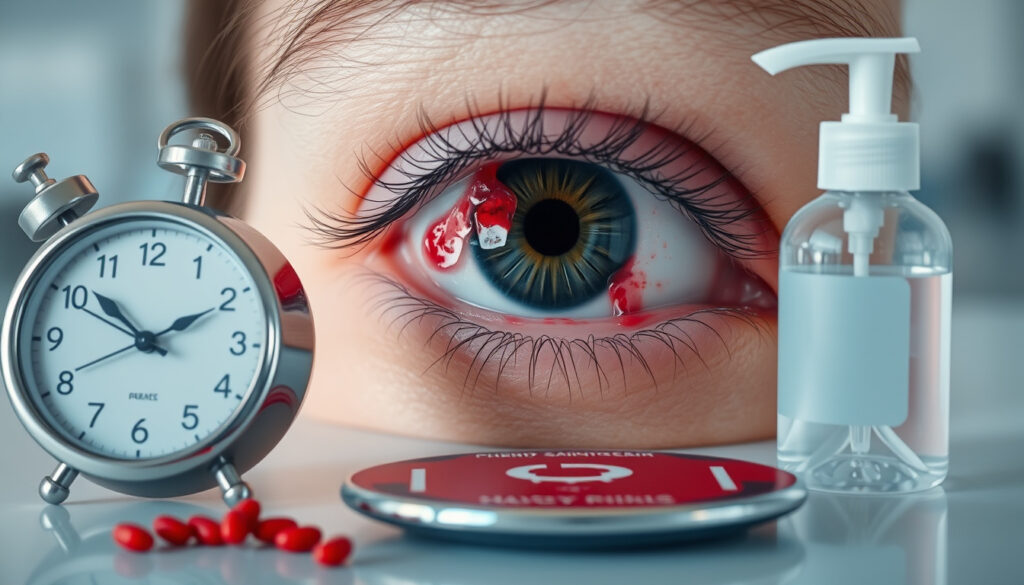
Is Pink Eye Contagious? Duration, Symptoms & Prevention
If your eyes are red, itchy, and weepy, the first question that comes to mind is usually, “Can I give this to my family?” Pink eye (conjunctivitis) is one of the most common eye conditions, and the answer depends entirely on what’s causing it. The U.S. Centers for Disease Control and Prevention (CDC) reports that viral and bacterial forms are very contagious, while allergic conjunctivitis is not. Knowing which type you have is the key to protecting everyone around you.
Viral pink eye contagious period: 7–14 days ·
Bacterial pink eye after antibiotics: 24–48 hours ·
Types of pink eye: 3 (viral, bacterial, allergic) ·
Annual U.S. cases: 3–6 million ·
Percentage caused by viruses: Up to 80%
Quick snapshot
- Viral and bacterial pink eye are very contagious (CDC)
- Allergic pink eye is not contagious (CDC)
- Bacterial cases become non-contagious 24–48 hours after starting antibiotics (Estrella Eye Care)
- Exact contagious window after viral symptoms fade varies by person (StatPearls)
- Whether pink eye can spread in swimming pools remains low-risk but unconfirmed (CDC)
- Viral pink eye: contagious for 10–14 days (StatPearls)
- Bacterial pink eye: non-contagious about 24 hours after antibiotic drops (Ubie Health)
- Allergic pink eye: not contagious at any point
- Identify type: watery discharge = likely viral; thick pus = likely bacterial
- Start hand hygiene and surface cleaning (AMA)
- See a doctor for diagnosis and possible antibiotic prescription
Five key facts, one pattern: contagiousness hinges entirely on the underlying cause — viral and bacterial spread easily, allergic does not.
| Label | Value |
|---|---|
| Most common cause of pink eye | Viruses (up to 80%) |
| Infectious period (viral) | 7–14 days |
| Infectious period (bacterial) after treatment | 24–48 hours |
| Annual U.S. cases | 3–6 million |
| Types | Viral, bacterial, allergic |
How long is pink eye contagious?
The contagious period for pink eye varies by cause. Viral conjunctivitis, most often caused by adenoviruses, is highly contagious for 10 to 14 days, according to StatPearls (a peer-reviewed medical knowledge base). Bacterial conjunctivitis, typically from Staphylococcus aureus or Streptococcus pneumoniae, becomes non-contagious 24 to 48 hours after starting antibiotic drops, notes Estrella Eye Care. Allergic conjunctivitis is never contagious.
How long should I quarantine if I have pink eye?
- Viral pink eye: stay home until tearing and redness subside — typically 7–14 days. (CDC)
- Bacterial pink eye: remain home for at least 24 hours after starting antibiotic treatment. (Ubie Health)
- If no antibiotics are used, bacterial pink eye stays contagious as long as symptoms last.
How long is quarantine for pink eye?
The American Medical Association (AMA) advises that people are likely contagious from about a day before symptoms appear until they no longer have symptoms. For viral pink eye, that can stretch to two weeks. For bacterial cases treated with antibiotics, most doctors recommend a 24-hour home period. The CDC emphasizes good hand hygiene and not sharing towels or pillows during any symptomatic period.
Is pink eye contagious after 24 hours?
It depends on treatment. If you have bacterial pink eye and started antibiotic drops, you are generally considered non-contagious after 24 hours. Viral pink eye, however, remains contagious far longer — usually 7 to 14 days from symptom onset. Clinical guides from Ubie Health note that viral cases can sometimes stay contagious up to 2–3 weeks.
Waiting it out with viral pink eye means up to two weeks of isolation. Bacterial treatment shortens that to a day, but only if you see a doctor and use the drops correctly. The consequence: untreated cases keep spreading in households.
The implication: timely treatment for bacterial cases drastically reduces household spread.
Is it okay to be around someone with pink eye?
Being near someone with pink eye carries real risk if the cause is viral or bacterial. The CDC warns that both forms spread easily through direct or indirect contact with infected eye secretions. Proximity alone is not the danger — touching contaminated surfaces and then your eyes is the main route.
Can I be around someone with pink eye and not get it?
- Yes, if you avoid touching your eyes and practice thorough handwashing before touching your face. (AMA)
- Keeping a distance of a few feet helps if the infected person is coughing or sneezing — but the bigger risk is shared surfaces.
Is pink eye contagious by touch?
Yes — this is the primary mode. The AMA explains that pink eye spreads via hands, doorknobs, towels, and pillow contact. When an infected person touches their eye and then touches a surface, the virus or bacteria can survive. Adenovirus, a common cause, can live on surfaces for up to 30 days, according to an AMA interview with an ophthalmologist.
Is pink eye contagious by air?
Airborne transmission is not typical. The CDC does not classify pink eye as an airborne disease. However, droplets from coughing or sneezing can reach eyes if someone is very close. The bigger concern remains direct hand-to-eye contact.
Is pink eye contagious to adults?
Yes, adults are just as susceptible as children. Age does not affect contagiousness — only exposure does. If an adult touches a contaminated surface and then rubs their eyes, they can contract the infection. The CDC notes that pink eye affects millions of all ages annually in the U.S.
The contagiousness of pink eye is driven by contact, not proximity. For families, the real risk is shared bathroom towels, pillowcases, and door handles. A 30-day surface survival means the virus may still be lurking after symptoms are gone.
How can you tell if pink eye is viral or bacterial?
Distinguishing the two is critical because treatment differs. The CDC highlights three causes: viruses, bacteria, and allergens. Each has a distinct symptom profile.
What are the first signs of pink eye?
- Viral: watery discharge, starts in one eye, often follows a cold or flu.
- Bacterial: thick yellow/green pus, crusting on lashes, may affect both eyes.
- Allergic (antihistamines like Zyrtec can help): intense itching, clear drainage, both eyes, no fever.
What does stage 1 pink eye look like?
Early symptoms include redness, swelling of the conjunctiva, increased tearing, and a gritty or burning sensation. The eye may feel “sticky,” especially upon waking. Discharge type is the biggest clue: watery points to viral; pus-like points to bacterial.
Symptoms of Pink Eye
| Symptom | Viral | Bacterial | Allergic |
|---|---|---|---|
| Discharge | Watery | Thick, yellow/green | Clear, watery |
| Itching | Mild | Mild | Intense |
| Eye affected | Usually one | Often both | Both |
| Associated cold | Common | Rare | No |
| Contagious | Yes | Yes | No |
One table, three patterns: the discharge type and itching level are the fastest way to guess the cause.
Misdiagnosing viral as bacterial leads to unnecessary antibiotic use. The American Academy of Ophthalmology stresses that antibiotics have no effect on viruses — and overuse contributes to resistance.
Distinguishing by discharge type remains the most reliable rapid indicator.
How to get rid of pink eye fast?
Treatment depends entirely on the cause. The fastest resolution comes from accurate diagnosis and the right approach.
Do I need antibiotics to get rid of pink eye?
- Viral pink eye: No. Antibiotics do not work. It resolves on its own in 7–14 days. Supportive care: cold compresses, artificial tears.
- Bacterial pink eye: Yes, prescription antibiotic drops can shorten the course to 24–48 hours.
- Allergic pink eye: No antibiotics. Antihistamine eye drops and avoiding allergens provide relief.
How to Treat Pink Eye
The CDC recommends these steps for all contagious types: wash hands frequently, avoid touching eyes, use separate towels and pillowcases, and disinfect commonly touched surfaces. Warm compresses can help with crusting in bacterial cases. For viral cases, cold compresses soothe inflammation.
- Artificial tears (preservative-free) for comfort.
- Wipe discharge from inner corner outward with a clean tissue — then discard.
- Do not share eye makeup, drops, or contact lenses.
Viral pink eye has no shortcut — you have to let it run its course. The most common mistake is begging for antibiotics. They won’t speed recovery for 80% of cases, and they can worsen allergic reactions.
Using antibiotics unnecessarily only fosters resistance, not recovery.
What are the first signs of pink eye?
Knowing early symptoms can help you isolate and treat quickly, reducing spread.
Symptoms of Pink Eye
- Redness in the white of the eye or inner eyelid.
- Increased tear production.
- Itchy, burning, or gritty feeling.
- Crusting on eyelashes or eyelids — especially noticeable after sleep.
- Sensitivity to light (photophobia) in some viral cases.
What does stage 1 pink eye look like?
Think of a mild irritation that quickly progresses. The eye appears pinkish-red, there may be a clear or white discharge, and the eyelid may stick shut after sleeping. If the discharge turns thick and greenish-yellow within a day, it’s likely bacterial. If clear and watery with a cold, it’s viral.
Recognizing early signs can prompt earlier isolation and reduce transmission.
Clarity check: what we know and what remains uncertain
Confirmed facts
- Viral and bacterial pink eye are highly contagious. (CDC, NCBI)
- Allergic pink eye is not contagious.
- Bacterial pink eye typically resolves after 24–48 hours of antibiotic use. (Estrella Eye Care, Ubie Health)
- Pink eye spreads through contact with infected eye secretions. (AMA)
What’s unclear
- Exact duration of contagiousness for viral pink eye after symptoms subside varies per person. (StatPearls)
- Whether pink eye can spread through shared swimming pools remains low risk but not definitively ruled out. (CDC)
- Adenovirus can survive on surfaces up to 30 days, raising uncertainty about post-symptom transmission. (AMA)
- Some clinical guides suggest viral pink eye may remain contagious up to 3 weeks, though typical range is 7–14 days. (Ubie Health)
This distinction ensures readers understand what is known versus what remains uncertain.
Viral and bacterial pink eye are very contagious. They can spread easily from person to person.
Both types are very contagious. They are spread through direct or indirect contact with the liquid that drains from the eye of someone who’s infected.
People are likely contagious about a day or so before symptoms start until they are no longer having symptoms.
For the patient wondering whether to go to work or send their child to school, the decision is clear: if symptoms are present and the cause isn’t confirmed allergic, stay home. For families with a known bacterial case, one day of antibiotics and clean surfaces stops the cycle. For viral cases, the two-week home stretch is the only responsible path — or you simply keep passing the infection around the household.
estrellaeyecare.com, memorialvision.com, ubiehealth.com, myclarityeyecare.com, ncbi.nlm.nih.gov
Frequently asked questions
Can pink eye cause vision loss?
Rarely. Most cases resolve without lasting damage. However, if you experience severe pain, light sensitivity, or blurred vision, see a doctor immediately — these could signal keratitis or other serious conditions. (CDC)
Can you get pink eye from a swimming pool?
Low risk but possible. Chlorine in pools kills many germs, but not all viruses. If an infected person swims and the water gets in your eyes, transmission can occur. The CDC advises not swimming with pink eye and wearing goggles. (CDC)
How do you clean your home after pink eye?
Use bleach-based cleaners on hard surfaces like doorknobs, counters, and refrigerator handles. Wash towels, pillowcases, and washcloths in hot water. Replace eye makeup and contact lens cases. The AMA recommends wiping down shared surfaces daily until symptoms resolve. (AMA)
Is pink eye contagious to pets?
Some bacteria and viruses can pass between humans and pets, but it’s uncommon. If your pet shows eye redness or discharge, consult a veterinarian. The CDC does not list pets as a typical reservoir for conjunctivitis.
Can you go to work or school with pink eye?
No — if it’s viral or bacterial and you have symptoms. The CDC advises staying home until symptoms improve and, for bacterial cases, after 24 hours of antibiotics. Many schools require a doctor’s note for return. For allergic pink eye, work and school are safe.
How long does pink eye last without treatment?
Viral cases last 7–14 days, sometimes up to 21 days. Bacterial cases can persist for 2–5 days without antibiotics, but symptoms may linger longer. Untreated bacterial pink eye can lead to complications like corneal ulcers. (StatPearls)
Can pink eye be a symptom of COVID-19?
Yes, but rarely. Conjunctivitis has been reported as a symptom in some COVID-19 cases. The CDC includes pink eye among possible signs, though fever and cough are more common. If you have pink eye along with respiratory symptoms, consider testing for COVID-19. (CDC)
These questions reflect common concerns when managing pink eye.
More related posts
 Lululemon We Made Too Much – Guide to Restocks, Deals and Returns
 7 Letter Word Using These Letters: Find & Unscramble Guide
 Asian Grocery Store Near Me – Top Chains Hours Delivery
 The Ark of the Covenant: Location, Contents, and Mysteries Explained
 Harry Potter and the Chamber of Secrets – Plot Summary, Book vs Movie
 His and Hers Cast: Tessa Thompson, Jon Bernthal Guide
 Sex and the City Movie: Complete 2024 Guide
 Hairstyles for Women Over 60: Flattering Cuts and Lengths