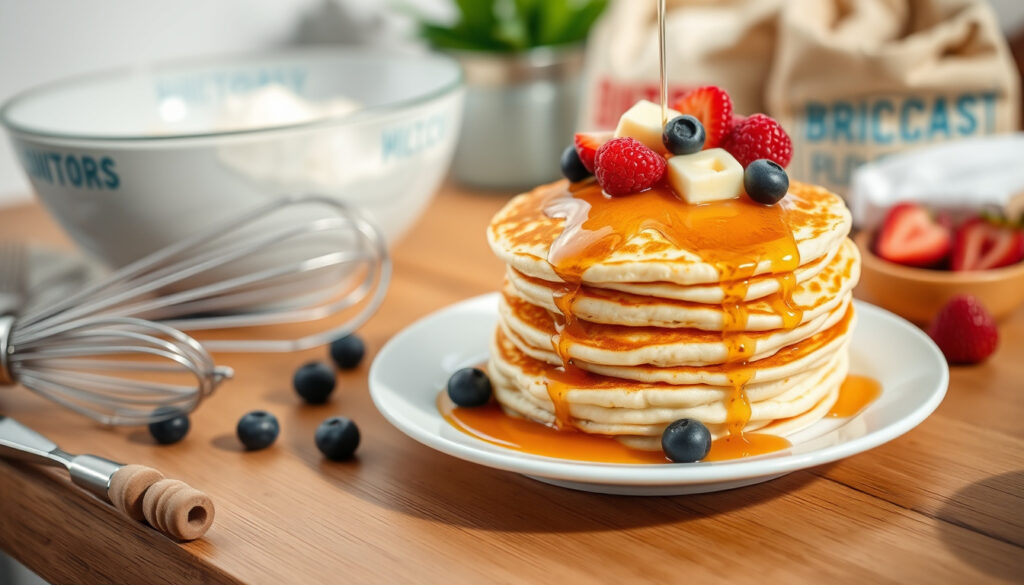
How to Make Pancakes: Easy Step-by-Step Recipe Guide
There’s something almost meditative about Sunday morning pancakes — the sizzle of butter in the pan, the slow rise of the batter, the satisfying flip that lands a golden disc on your plate. Most home cooks have faced the same frustration: flat, chewy results when you were aiming for pillowy fluff. The difference usually comes down to a handful of technique secrets and ingredient ratios that professional recipe developers have refined over years of testing.
Prep time: 10 minutes · Cook time: 20 minutes · Servings: 4 · Calories per serving: 150 · Basic ingredients: flour, eggs, milk
Quick snapshot
- 1.5 cups flour (Laura Fuentes)
- 2.5 tsp baking powder for rise (Laura Fuentes)
- 30-minute batter rest improves texture (Laura Fuentes)
- Flour, eggs, milk only needed (Recipe Video)
- No baking powder required (Recipe Video)
- 5-minute prep time (Recipe Video)
- Bubbles form on surface when ready (Fantabulosity)
- 350–375°F griddle temperature (Fantabulosity)
- First side: 2 minutes exactly (Fantabulosity)
| Measure | Value | Source |
|---|---|---|
| Standard yield | 8–10 pancakes | Recipe consensus |
| Pan temperature | 350–375°F | Fantabulosity |
| Batter rest time | 30 minutes | Fantabulosity |
| Flour amount | 1.5 cups | Laura Fuentes |
| Baking powder | 2.5 tsp | Laura Fuentes |
| Milk amount | 1.25 cups | Laura Fuentes |
| Batter portion | 1/4 cup per pancake | Laura Fuentes |
| Eggs in recipe | 1 large egg | Laura Fuentes |
How do I make simple pancakes?
Simple pancakes start with understanding that the batter is half science experiment. Whisk together your dry ingredients first — flour, baking powder, salt, and sugar — in a large bowl to distribute the leavening agent evenly (Laura Fuentes, recipe author). Create a well in the center and pour in your wet ingredients: milk, one egg, melted butter, and vanilla extract. This well method prevents overmixing, which is the single biggest mistake home cooks make.
The goal is to stop mixing the moment no flour is visible — lumps are not just acceptable, they’re desirable (Fantabulosity, recipe publisher). Overmixing develops the gluten in flour too much, turning your pancakes from tender to rubbery. A few strokes with a whisk until the batter just comes together produces a thick consistency that traps air bubbles perfectly.
Basic batter tips
- Measure flour by spooning into the cup — don’t pack it down or you’ll add too much
- Room temperature eggs and milk integrate better than cold ingredients straight from the fridge
- Let the mixed batter rest for 30 minutes while you preheat your pan — this develops gluten structure (Fantabulosity)
- Sugar and fat (butter) both tenderize the crumb by shortening gluten strands (Jow, food science blog)
Cooking essentials
- Heat a non-stick pan or griddle to 350–375°F — use a thermometer or test with a droplet of water
- Grease lightly with butter, not oil, for flavor and browning
- Pour exactly 1/4 cup batter per pancake for consistent sizing (Laura Fuentes)
- Pour from the middle in a circular motion for evenly shaped rounds (Cafe Delites)
What are the ingredients for pancakes?
The core ingredient list for fluffy pancakes is surprisingly short: flour, a leavening agent, liquid, fat, egg, and a pinch of salt. Everything else is enhancement. All-purpose flour forms the structural backbone — the gluten network that traps the gas bubbles created by baking powder (Jow). Without sufficient gluten development, those bubbles collapse before the pancake sets.
Baking powder is the engine: it reacts with the liquid in your batter to produce carbon dioxide gas, then reacts again when heated to produce even more lift (TSCPL, science library). Double-acting baking powder — the standard type sold in stores — provides this two-stage reaction, which is why pancakes rise even as the underside cooks.
Baking powder creates gas bubbles through a chemical reaction with liquid and heat. This carbon dioxide gets trapped in the gluten network, creating the air pockets that make pancakes fluffy rather than flat.
Core pantry staples
| Ingredient | Amount | Function |
|---|---|---|
| All-purpose flour | 1.5 cups | Structure and gluten network |
| Baking powder | 2.5 tsp | Leavening, CO2 production |
| Salt | 1/2 tsp | Flavor; slows gluten formation |
| Sugar | 2 tbsp | Browning; tenderizes crumb |
| Milk | 1.25 cups | Liquid for batter; reacts with powder |
| Egg | 1 large | Binder; richness; structure |
| Butter (melted) | 3 tbsp | Fat for tenderness; flavor |
| Vanilla extract | 2 tsp | Flavor enhancement |
The pattern is clear: most ingredients serve dual roles, building structure while enhancing flavor or texture.
Substitutions overview
- Milk: Buttermilk adds tang and slightly more lift; thin with water if unavailable
- Egg: One tablespoon of flaxseed mixed with three tablespoons water replaces one egg
- Butter: Vegetable oil works but reduces tenderness; melted coconut oil is a neutral alternative
- Baking powder: No true substitute — without it, pancakes stay flat (STEM Unplugged, science educator)
How to make pancakes step by step?
The step-by-step process follows a pattern: mix dry, mix wet, combine with restraint, rest the batter, then cook in stages. Each stage has a specific purpose, and skipping steps or rushing causes the most common failures (Laura Fuentes). Professional recipe developers consistently point to technique — not ingredient quality — as the difference between restaurant-level results and kitchen disappointments.
Mixing the batter
- Whisk dry ingredients together in a large bowl: 1.5 cups flour, 2.5 tsp baking powder, 1/2 tsp salt, 2 tbsp sugar. Sift if lumpy — uneven baking powder creates dense spots.
- Combine wet ingredients in a separate container: 1.25 cups milk, 1 egg, 3 tbsp melted butter, 2 tsp vanilla. Whisk until smooth.
- Pour wet into dry, creating a well in the center first. Use a spatula to fold gently — do not stir aggressively.
- Stop when batter just comes together, even if small lumps remain. The mixture will be thick and slightly bumpy (Laura Fuentes).
- Rest for 30 minutes uncovered at room temperature. This allows gluten to relax and baking powder to begin reacting.
Frying technique
- Heat your pan or griddle to 350–375°F — if too hot, bubbles pop before edges set; if too cool, pancakes spread thin and dense (Jow)
- Lightly grease with butter using a paper towel or pastry brush
- Pour 1/4 cup batter per pancake — don’t spread it, just let it settle
- Watch for bubbles forming on the surface and edges to look defined, not wet
Flipping perfectly
- Cook first side for exactly 2 minutes — the underside needs time to develop golden color and structure (Laura Fuentes)
- Flip once when bubbles have formed across most of the surface and the edges look set
- Cook second side for 1–1.5 minutes — less time needed since the pancake is already mostly cooked
- Never press the pancake after flipping — this squeezes out the air pockets that create fluffiness (Laura Fuentes)
The visual cue for flipping — bubbles covering the surface — typically appears between 90 seconds and 2 minutes on a properly heated pan. Flipping too early breaks the partially-set surface; too late risks burning the underside.
How to make fluffy pancakes?
Fluffiness comes from three sources working together: gas production from leavening, bubble retention from gluten structure, and cell expansion from steam inside the crumb. Controlling all three requires attention to ingredient ratios and technique at each stage. The good news is that the adjustments needed are minimal — mostly about not overworking the batter and giving baking powder the right conditions to perform.
Baking powder is the primary gas producer. Double-acting varieties — the standard sold in grocery stores — release gas first when mixed with liquid, then again when heated (TSCPL). This two-stage reaction is why a rested, thick batter rises better than a thin, overmixed one: the bubbles have something to grab onto as they form.
Baking powder secrets
- Use aluminum-free baking powder if you taste metallic notes — it performs identically otherwise
- Measure precisely: too little powder yields flat results, too much creates bitter aftertaste and excessive rise that collapses
- Freshness matters — open a new container if yours is more than six months old; old powder loses potency (Laura Fuentes)
- Salt slows gluten formation for a more tender crumb, but don’t reduce below 1/2 teaspoon or the flavor suffers
Egg white method
- Separate one egg: beat the white separately until it holds soft peaks
- Mix the batter as usual, using only the yolk in the wet ingredients
- Fold the whipped white into the finished batter just before cooking — don’t fully incorporate; small white streaks add lift
- This technique adds visible height and a more tender interior crumb (Jow)
The single most common cause of flat pancakes is overmixing. Once flour meets liquid, gluten begins developing — stirring beyond “just combined” creates long, tough strands that contract as the pancake cooks, squeezing out the air pockets that should create fluffiness.
How to make easy pancakes with 3 ingredients?
Sometimes you don’t have a stocked pantry, and that’s where the three-ingredient pancake rescue comes in. With just flour, eggs, and milk, you can produce a serviceable pancake — notably flatter than the full-recipe version but entirely edible and satisfying when cravings strike. This stripped-down approach strips away the leavening, so the result relies entirely on steam and air incorporated during mixing for any rise.
The science is simpler: without baking powder, there’s no chemical gas production. Without sugar and butter, there’s less tenderization and browning. What remains is essentially a quick bread batter — denser and more bready than its leavened counterpart, but still worth making when that’s what you have (Recipe Video).
Minimalist recipe
- Whisk 1.25 cups flour with a pinch of salt
- Beat 2 eggs with 200ml milk in a separate bowl
- Pour wet ingredients into flour and stir until just combined — lumps are fine
- Heat buttered pan to medium and cook in 1/4 cup portions
- Expect 1–2 minutes per side; flip when surface looks set
Quick variations
- Banana pancakes: Mash half a ripe banana into the wet ingredients for natural sweetness
- Thin crepe style: Add extra milk for a pourable batter; cook in wider pan for French-style results
- Thick American style: Reduce milk slightly or add a tablespoon of oil to the batter
- Sweetener boost: Add a tablespoon of sugar or honey if the batter tastes too plain
Three-ingredient pancakes are not fluffy by any definition — they’re flat, slightly dense, and chewy compared to the full recipe. But they’re fast (no resting required), cheap, and work as a base for toppings that make up for texture differences.
Related reading: symptoms of food poisoning · how to lower cholesterol naturally
Home cooks aiming for restaurant-quality stacks often rely on a fluffy from-scratch guide that simplifies pantry-staple techniques for light, fluffy results.
Frequently asked questions
How long do pancakes take to cook?
Each pancake takes approximately 3–4 minutes total: about 2 minutes on the first side and 1–2 minutes on the second. A full batch of 8–10 pancakes requires 15–25 minutes of cooking time, depending on pan size and how often you need to adjust heat between batches.
Can I freeze pancake batter?
Batter with baking powder doesn’t freeze well — the chemical reaction continues in the freezer and produces off-flavors. Cooked pancakes freeze perfectly for up to two months in airtight containers. Reheat directly from frozen in a toaster or 350°F oven for 5–8 minutes.
What oil for pancakes?
Butter is the preferred fat for pancakes because it adds flavor and aids browning. If you need a higher smoke point, use a neutral oil like vegetable or canola for the pan, then add butter to the batter. Avoid olive oil — its flavor overwhelms the mild pancake taste and it smokes at lower temperatures than needed.
Why are my pancakes tough?
Tough pancakes result from overmixing the batter, which develops too much gluten. The fix is to stop stirring as soon as the flour is incorporated, even if the batter looks lumpy. Also check that your baking powder is fresh — expired powder produces minimal rise, forcing you to overwork the batter trying to compensate.
How to keep pancakes warm?
Place cooked pancakes on a wire rack over a baking sheet in a 200°F oven. Never stack them — the steam trapped between layers makes them soggy. They stay warm for up to 30 minutes this way. For longer storage, freeze as directed above.
Are pancakes gluten-free?
Standard pancakes use wheat flour and contain gluten. For gluten-free pancakes, replace the all-purpose flour with a 1:1 gluten-free baking blend. The result won’t be identical — gluten-free batters lack the stretchy network that traps gas — but modern blends include xanthan gum that provides similar structure.
What toppings for pancakes?
Classic maple syrup remains the standard, but the range extends widely: fresh berries, banana slices, chocolate chips, whipped cream, honey, Nutella, or savory options like bacon and butter for those who prefer salt over sweet. Amounts depend on preference — there’s no wrong choice.
What experts say
“Stop mixing when you no longer see flour to avoid chewy pancakes.”
— Laura Fuentes, recipe author
“Lumps are good and create fluffy pancakes, instead of flat, chewy pancakes.”
— Fantabulosity, recipe publisher
“This carbon dioxide gas is what makes our batter rise and makes a pancake so fluffy.”
— STEM Unplugged, science educator
Mastering pancake technique rewards home cooks with consistently impressive weekend breakfasts without special equipment or exotic ingredients. The investment is 30 minutes of passive rest time and the discipline to resist overmixing — skills that transfer to dozens of other baking projects.
More related posts
 High Speed Object A11pl3Z NASA – Interstellar Comet Facts
 Pixel 10 Pro Fold: Specs, Price, Release Date & Review
 Baylor Bears vs Duke Blue Devils Player Stats (March 23, 2025)
 GTA 5 Release Date: Full Timeline, Sales & GTA 6 Delay
 Watch Los Juegos del Hambre: Streaming Guide 2025
 Dubai Chocolate Near Me in Ireland: Stores & Prices
 How to Calculate Percentage Increase: Formula & Examples
 Dish Network Phone Number – Official Contacts and Hours