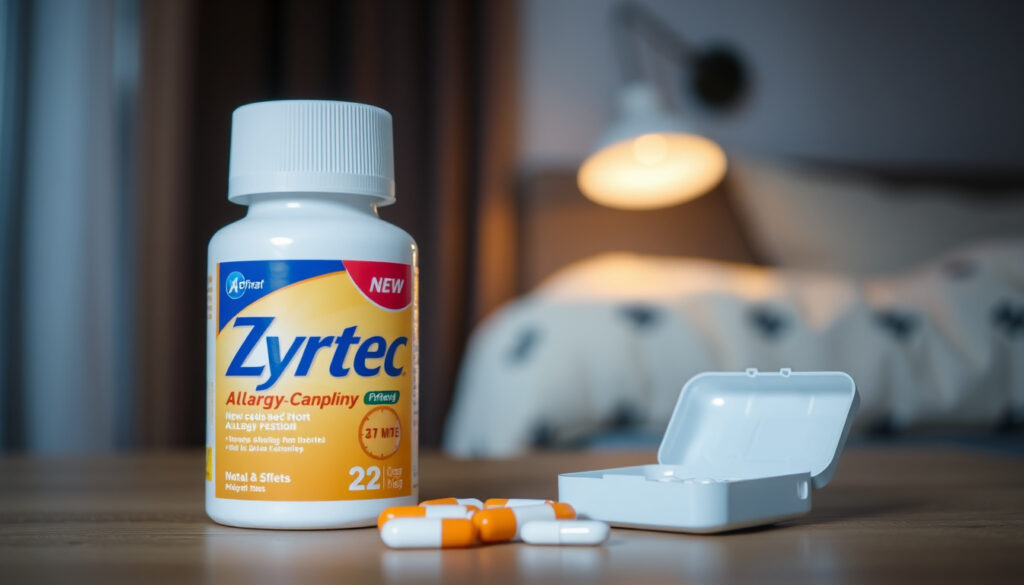
Does Zyrtec Make You Drowsy? Side Effects, Duration, Tips
You pop a Zyrtec before heading out, hoping your hay fever will back off, but minutes later you feel a familiar fog settle in—heavy eyelids, slower reactions. This guide breaks down the science, the duration, the comparisons, and a critical FDA warning you need to know if you take it long-term.
Drowsiness incidence: >1 in 10 users ·
Duration of action: 24 hours ·
Sedation compared to older antihistamines: Less than Benadryl ·
FDA warning (2020): Severe itching after stopping long-term use
Quick snapshot
- Common side effect in more than 1 in 10 users (GoodRx)
- Less sedating than Benadryl (StatPearls)
- May be more sedating than Claritin (Mayo Clinic)
- Severe itching after long-term use (U.S. FDA)
- Rare but requires medical attention (FDA Safety)
- Do not stop suddenly without guidance (U.S. FDA)
- Zyrtec: fast relief, moderate sedation
- Claritin: less drowsy, slower onset
- Allegra: non-drowsy for most
Six key facts about Zyrtec, one pattern: it delivers rapid 24-hour allergy relief but carries a noticeable sedation risk that you need to weigh against your daily routine.
| Attribute | Value |
|---|---|
| Generic name | Cetirizine |
| Drug class | Second-generation antihistamine (MedlinePlus) |
| Onset of action | Within 1 hour |
| Duration | Up to 24 hours |
| Common side effect | Drowsiness (>1 in 10 users) (GoodRx) |
| FDA warning (2020) | Severe itching after discontinuation (rare) (U.S. FDA) |
Is Zyrtec a sedating antihistamine?
Does Zyrtec make you drowsy?
- Yes. Drowsiness is listed as a common side effect affecting more than 1 in 10 users. According to the U.S. Food and Drug Administration, common side effects of cetirizine include fatigue, drowsiness, and dry mouth.
- Cetirizine is a second-generation antihistamine, but it is more sedating than loratadine (Claritin) and less sedating than diphenhydramine (Benadryl). StatPearls (clinical reference) states that somnolence is a primary adverse effect and appears to be dose-related.
Does Claritin make you drowsy?
- Claritin (loratadine) is also a second-generation antihistamine but has a much lower incidence of drowsiness. It is often labeled “non-drowsy,” though a small percentage of users may still feel tired. The trade-off: Claritin takes longer to start working (1–3 hours vs. Zyrtec’s 1 hour).
Zyrtec users get faster relief but face a higher sedation risk than with Claritin or Allegra. If you need quick symptom control and can tolerate some drowsiness, Zyrtec wins on speed. If you must stay alert, consider alternatives.
Bottom line: Zyrtec is a sedating antihistamine for a significant portion of users. It sits in the middle of the drowsiness spectrum — stronger than Claritin, gentler than Benadryl.
How long does Zyrtec make you drowsy?
Does Zyrtec make you drowsy for 24 hours?
- The medication’s effect lasts up to 24 hours, and drowsiness can persist for that full period. StatPearls notes that the peak sedative effect may occur within the first few hours after dosing. Many users report that drowsiness is strongest in the first 4–6 hours and then tapers.
- Individual variation is wide: some people feel drowsy only during the first few days of use, while others experience it consistently.
How long does cetirizine make you sleepy?
- Sleepiness typically lasts 12–24 hours, aligning with the drug’s half-life (~8–10 hours). GoodRx (health information platform) advises avoiding driving or activities requiring alertness until you know how Zyrtec affects you.
The drowsiness window overlaps with the entire dosing interval. If you take it in the morning for pollen season, you may feel sluggish through your workday. That’s why timing matters.
Bottom line: Drowsiness can last as long as the drug’s effects — up to 24 hours. The worst of it usually hits in the first few hours, so plan around that.
Is it better to take Zyrtec in the morning or night?
Does Zyrtec make you drowsy in the morning?
- If you take Zyrtec at night, you may still feel some drowsiness the next morning, though it is usually milder. GoodRx suggests that taking it in the evening can help if daytime drowsiness is bothersome.
- For people who do not feel drowsy at all, morning dosing is perfectly fine and may better align with daytime allergy peaks.
Does Zyrtec-D make you sleepy?
- Zyrtec-D contains cetirizine plus pseudoephedrine, a decongestant that can cause insomnia or jitteriness. Some users find the pseudoephedrine counteracts the drowsiness, but sedation still occurs for others.
Best time of day to take Zyrtec 24 hour
- General recommendation: take it at night if you are sensitive to sedation, in the morning if you are not. Consider your symptom pattern — if allergies flare at night, evening dosing may help you sleep better. GoodRx also notes that lower dosing may reduce drowsiness.
Bottom line: Night-time dosing is the safest bet if drowsiness hits you hard. Morning users who don’t get sleepy can stick with their routine.
What is the most common side effect of Zyrtec?
Does Zyrtec make you gain weight?
- Weight gain is not listed as a common side effect in FDA labeling or clinical references. StatPearls does not mention weight changes. If you experience unexplained weight gain, discuss other causes with your doctor.
What is the new warning about Zyrtec?
- In 2020, the U.S. Food and Drug Administration required a warning that stopping cetirizine after long-term use may cause rare but severe itching. The condition has been reported in patients who used the medicine daily for months or years. Serious outcomes have included disability, hospitalization, and thoughts of self-harm.
Does Zyrtec cause drowsiness in children?
- Drowsiness can occur in children as well. StatPearls notes that in children aged 2–11, most adverse reactions are mild or moderate, and headache is actually more common than drowsiness.
Bottom line: Drowsiness and fatigue are the most common side effects. The new FDA warning about post-discontinuation itching is rare but serious — do not stop long-term use abruptly without medical advice.
What should you not mix with Zyrtec?
Can you drink alcohol with Zyrtec?
- Avoid alcohol. GoodRx warns that alcohol can intensify drowsiness and impair coordination. Even one drink may make the sedation much stronger.
Does Zyrtec interact with other medications?
- Use caution with other CNS depressants such as benzodiazepines, opioids, muscle relaxants, and sleep aids. The combination can cause excessive sedation. Always check with a pharmacist or doctor before mixing.
Bottom line: Alcohol and sedatives are the main no-gos with Zyrtec. If you take any medication that makes you sleepy, adding Zyrtec may amplify that effect dangerously.
Zyrtec vs. other antihistamines: comparison table
Three popular OTC allergy meds, one key difference: sedation potential and onset speed vary widely.
| Medication | Generic | Onset | Duration | Drowsiness risk |
|---|---|---|---|---|
| Zyrtec | Cetirizine | 1 hour | 24 hours | High (>1 in 10) (GoodRx) |
| Claritin | Loratadine | 1–3 hours | 24 hours | Low (<1 in 100) |
| Allegra | Fexofenadine | 1 hour | 24 hours | Very low (<1 in 1,000) (StatPearls) |
Upsides
- Fast relief (within 1 hour)
- One dose covers 24 hours
- Effective for both allergies and hives
- Available over-the-counter, affordable
Downsides
- Drowsiness in >1 in 10 users
- Risk of rare severe itching after stopping long-term use (U.S. FDA)
- Cannot mix with alcohol
- May interact with other sedatives
The implication: if sedation is your main concern, Allegra is the safest bet; if speed matters, Zyrtec is worth the trade-off.
Timeline: key dates in Zyrtec history
- — Zyrtec (cetirizine) approved by FDA.
- — FDA requires warning about rare severe itching after stopping long-term use (U.S. FDA).
If you have been on Zyrtec daily for months, do not stop abruptly. The withdrawal itching can be severe enough to require hospitalization. Taper under medical guidance.
What this means: long-term users need a plan for tapering, not just for allergy control but to avoid withdrawal effects.
What’s confirmed, what’s unclear
Confirmed facts
- Drowsiness is a common side effect of Zyrtec, affecting more than 1 in 10 users (GoodRx).
- Zyrtec is a second-generation antihistamine (MedlinePlus).
- FDA requires a warning about severe itching after discontinuation (U.S. FDA).
What’s unclear
- Exact percentage of users who experience drowsiness in different populations.
- Long-term effects of daily Zyrtec use beyond one year.
- Whether tolerance to drowsiness develops in all users.
The pattern: the science is clear on common side effects, but long-term dynamics remain understudied.
Expert perspectives
The most common side effect of cetirizine is feeling sleepy and tired. This happens in more than 1 in 10 people.
Feeling drowsy is a common Zyrtec side effect. It’s typically not as severe as the drowsiness caused by first-generation antihistamines, such as Benadryl.
GoodRx (health information platform)
The catch: while expert consensus confirms drowsiness is common, individual response varies widely.
Summary
For anyone reaching for Zyrtec to tackle seasonal allergies, the drowsiness trade-off is real but manageable. The faster relief and 24-hour coverage make it a strong choice, especially if you take it at night. But the FDA warning about stopping long-term use means you should not treat it as a permanent daily crutch without a plan. For the active, alert-hours user in the U.S., the decision is clear: choose Zyrtec when speed matters and you can dose around sleep, or pick a less sedating alternative like Claritin or Allegra if you need to stay sharp all day.
Frequently asked questions
Can Zyrtec make you drowsy even after taking it for a while?
Yes, some people never build tolerance to the sedation. Others find the drowsiness lessens after a few days. If it persists, talk to your doctor about switching to a less sedating antihistamine.
Does Zyrtec cause less drowsiness than Benadryl?
Yes. Benadryl (diphenhydramine) is a first-generation antihistamine that is much more sedating. Zyrtec is a safer choice for daytime use, though not non-drowsy.
Can alcohol worsen Zyrtec drowsiness?
Yes, alcohol can significantly intensify the sedative effects. Avoid drinking while taking Zyrtec.
Is Zyrtec non-drowsy for everyone?
No. While some users feel no drowsiness, it is a common side effect. You cannot assume it will be non-drowsy for you.
Should I stop taking Zyrtec if I feel extremely drowsy?
If drowsiness severely affects your functioning, consult a healthcare provider. Do not stop abruptly after long-term use due to the risk of withdrawal itching.
Does taking Zyrtec at night reduce daytime drowsiness?
Yes, nighttime dosing can help shift the peak drowsiness to sleep hours, leaving you less affected during the day.
Can children take Zyrtec and experience drowsiness?
Yes, drowsiness can occur in children, though headache is more common. Always use age-appropriate dosing.
Learn more about related medications: Over-the-Counter Antibiotics – What’s Available and What’s Not and What Is C. Diff? Symptoms, Causes & Treatment Guide.
More related posts
 Galaxy S7 to Buy in 2025: Price, Worth & Buying Guide
 KPop Demon Hunters Songs: Full Track List, Singers & Most Played
 Cheapest States to Live in 2025: Rankings & Cost of Living Guide
 Easy Portuguese Recipes at Home: Quick Dinners & Desserts
 How Many Teaspoons in a Tablespoon? (Conversion Guide)
 The Apothecary Diaries Season 2 – Where to Watch and Episode Guide
 Google Customer Service Phone Number 24/7: What Actually Works
 Zack de la Rocha: RATM Vocalist, Activist, Recent Injury