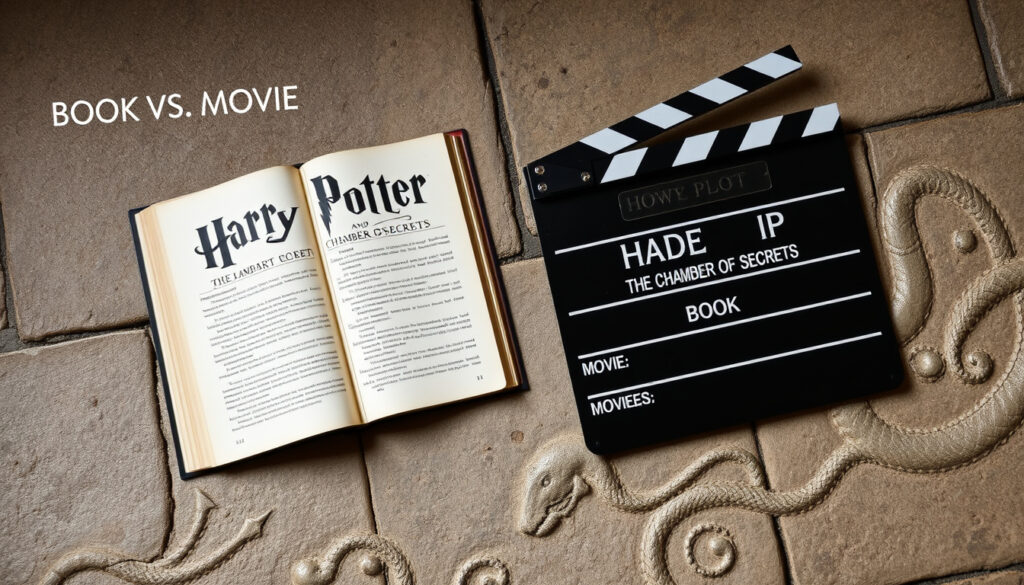
Harry Potter and the Chamber of Secrets – Plot Summary, Book vs Movie
Harry Potter and the Chamber of Secrets is the second installment in J.K. Rowling’s internationally celebrated fantasy series. Originally published as a novel in 1998, the story was adapted into a feature film in 2002. The narrative centers on a mystery that unfolds at Hogwarts School of Witchcraft and Wizardry, where students are being attacked by an unseen force. Both the book and its film adaptation have become cultural touchstones, introducing key plot elements that resonate throughout the entire series.
This guide provides a comprehensive overview of the story’s plot, the central mystery of who opened the Chamber of Secrets, the notable differences between the book and movie versions, and practical information for those looking to read or watch the adaptation. Whether encountering the tale for the first time or revisiting it, understanding the distinctions between the source material and the film can enrich the experience.
What Is Harry Potter and the Chamber of Secrets About?
Plot Overview
The novel follows Harry Potter’s second year at Hogwarts, where a mysterious force begins petrifying students. Harry discovers he can speak Parseltongue (snake language) and hears disembodied voices, leading him and his friends to investigate the legendary Chamber of Secrets. They uncover that Ginny Weasley, possessed by a memory of the young Lord Voldemort preserved in a diary, has been opening the chamber and unleashing a basilisk to attack students.
The film follows a similar narrative but with significant streamlining, focusing on the main mystery while removing or altering numerous subplots and character moments for pacing. Those interested in further details about the adaptation can explore comprehensive summaries available through film databases and fan resources.
According to legend, the Chamber of Secrets was built by Salazar Slytherin, one of Hogwarts’ founding wizards. It was said to be opened only by his true heir, who would purge the school of students deemed unworthy of magical education. More about the wizarding world’s history and founding mythology can be found through official resources.
Key Facts About the Story
- The basilisk is a giant serpent housed in the Chamber of Secrets and used by the possessed Ginny Weasley to attack students, petrifying them.
- Tom Riddle is a memory of the young Lord Voldemort preserved in a diary that possesses Ginny and controls her actions throughout the story.
- The petrification attacks can be reversed if the victims are treated quickly enough.
- Harry’s ability to speak Parseltongue marks him as a suspect in the attacks.
- The diary containing Riddle’s memory is later revealed to be one of Voldemort’s horcruxes.
- Fawkes the phoenix and Dumbledore’s sword play crucial roles in the climax.
- Dobby the house-elf appears initially as an obstacle before becoming an unexpected ally.
| Fact | Book | Movie |
|---|---|---|
| Length/Pages | 341 pages | 161 minutes |
| Main Antagonist Reveal | Tom Riddle | Same |
| New Characters | Dobby, Lockhart | Same |
| Foreshadowing | Ginny attempts to confess multiple times | Foreshadowing removed for surprise factor |
| Rooster Subplot | Hagrid discovers killed roosters | Omitted |
| Ending | Gryffindor wins House Cup | Hagrid’s return celebrated |
Who Opened the Chamber of Secrets?
Ginny Weasley opened the Chamber of Secrets, though she was manipulated and controlled by Tom Riddle’s memory in the diary. In the book, Ginny attempts to confess multiple times, providing substantial foreshadowing of her involvement. The movie lacks this foreshadowing, making the reveal more shocking for viewers unfamiliar with the source material.
Ginny receives the diary from Lucius Malfoy, who plants it among her belongings during their encounter at Borgin and Burkes. The house-elf Dobby later signals Harry about this connection, but the film omits this explanation, leaving viewers without clarity on how Harry knows the truth about Lucius’s role.
The diary represents one of Voldemort’s earliest horcruxes—objects containing fragments of his soul. This discovery becomes pivotal to the broader series mythology, establishing that Voldemort intentionally split his soul to achieve immortality. For comprehensive character timelines, fan wikis offer detailed breakdowns of how this artifact fits into the larger narrative arc.
Key Characters in the Mystery
Tom Riddle emerges as a charming student from Hogwarts’ past who turns out to be the young Voldemort. He uses Ginny as a vessel to act out his plans, gradually draining her life force while she writes in the diary. Harry ultimately confronts Riddle in the Chamber itself, destroying both the basilisk and the diary.
Dobby the house-elf appears initially as a warning presence, attempting to prevent Harry from returning to Hogwarts. His loyalty shifts after Harry helps free him from Lucius Malfoy’s service, making him a reluctant but genuine ally in uncovering the truth.
What Are the Key Differences Between the Book and Movie?
The adaptation makes substantial changes across multiple plot points. The film streamlines the narrative for pacing, cutting or condensing numerous subplots while preserving the central mystery. For film-specific details and production information, the movie database offers comprehensive records.
Opening and Early Story
The book features extended scenes with Uncle Vernon being cruel to Harry and Harry winding up Dudley with pretend magic, with Harry banned from saying the word “magic.” In the book, Harry sees Dobby in the hedges outside his house; this scene is absent from the film. The book includes a visit to Gringotts, which does not appear in the movie.
Mr. Weasley repairs Harry’s glasses in the book, while Hermione does this in the film. Lucius and Mr. Weasley engage in a physical fight in the bookshop in the book but only have tense words in the film.
The film condenses the investigation timeline considerably. Key scenes like the Deathday Party—where Harry first hears the voice and discovers Mrs. Norris petrified—receive different treatment in terms of pacing and discovery.
Investigation and Discovery
In the book, Harry tells Ron about the voices in bed after going straight to bed, and finds the wall message after the Deathday party. In the film, he tells both Ron and Hermione outside detention, and they follow the voice to find the message together.
The rogue Bludger incident differs significantly: in the book, only Fred and George notice it and call a timeout; Harry tells Oliver Wood to leave him to it. In the film, the Bludger hits Wood’s broom, Hagrid notices it, and it causes more destruction. Harry must distract Snape with a firework causing swelling while Hermione steals potion ingredients in the book; this doesn’t occur in the film.
Climactic Differences
In the book, Harry puts on the Sorting Hat and shouts for help, and the sword hits him on the head. In the film, the sword materializes in the hat on the shelf. The film’s basilisk fight scene is considerably longer than in the book.
Fawkes heals Harry with his tears while Riddle is still alive in the book, but after Riddle’s destruction in the film. In the book, Harry repeatedly stabs the diary causing Tom to burst into blinding light. In the film, Harry destroys the diary with a single decisive stab, and Riddle writhes then vanishes.
The book ends with the train journey home where Harry gives his phone number to his friends. The film ends with everyone cheering Hagrid’s return instead.
Publication Details and Where to Access It
Harry Potter and the Chamber of Secrets was first published by Bloomsbury on 2 July 1998. The novel runs 341 pages and became an immediate bestseller, translated into numerous languages for international audiences. Those looking to explore reader reviews and ratings can find extensive community feedback on major book platforms.
The film adaptation directed by Chris Columbus premiered on 15 November 2002. The movie runs approximately 161 minutes and has been released across various streaming platforms and home video formats over the years.
Streaming availability for the film varies by region and platform. Checking major streaming services directly provides the most current options for watching the adaptation.
Themes Explored in the Story
The story explores themes of prejudice through the “Mudblood” slur and pure-blood ideology espoused by Salazar Slytherin’s legacy. It introduces foreshadowing of Voldemort’s true nature through Tom Riddle’s diary, establishing him as a half-blood orphan raised by Muggles—details that gain significance as the series progresses.
The narrative also addresses loyalty, sacrifice, and the importance of friendship. Harry’s willingness to risk everything to save Ginny demonstrates the bonds formed at Hogwarts that transcend house rivalries.
Chronology of Key Events
- Summer at the Dursleys: Harry endures renewed mistreatment from his aunt and uncle before being rescued by the Weasley family flying car.
- Hogwarts arrival: The flying car incident marks Harry’s dramatic return to school, setting the tone for the year ahead.
- Halloween petrification: The attacks begin, with Mrs. Norris found frozen near the walls bearing the message that the Chamber has been opened.
- Investigation unfolds: Harry and Ron pursue clues, encountering Moaning Myrtle, Aragog the acromantula, and studying Parseltongue.
- Chamber climax: Harry enters the Chamber, battles the basilisk, destroys Riddle’s diary, and rescues Ginny.
- 1998: The novel is published by Bloomsbury, introducing the story to readers worldwide.
- 2002: The film adaptation premieres in theaters, bringing the Chamber of Secrets to life on screen.
Established Facts Versus Remaining Questions
| Established Information | Uncertain or Unavailable Details |
|---|---|
| Ginny opened the Chamber under Riddle’s possession | Specific details about why the book was banned in certain locations |
| The basilisk is a giant serpent that petrifies through eye contact | Precise reading level assessments for the novel |
| The diary represents one of Voldemort’s horcruxes | Detailed cast information for the film adaptation |
| Core narrative events in both book and film | Current streaming platform availability |
| Tom Riddle is Voldemort’s younger self | Production budget or box office figures |
The Chamber of Secrets in Context
The Chamber of Secrets holds a unique place in the Harry Potter mythology. Built by Salazar Slytherin during the founding of Hogwarts, it was designed as a failsafe—a way for his lineage to purge the school of students he deemed unworthy of magical education.
The legend warns that only Slytherin’s heir can open the chamber. When the attacks resurface during Harry’s second year, suspicion falls on those with Slytherin connections, particularly those who can speak Parseltongue.
This novel establishes critical elements for the entire series. The diary introduces the concept of horcruxes, Tom Riddle’s character provides insight into Voldemort’s origins, and the events at Hogwarts deepen the bonds between Harry and his friends that define the series.
Sources and Further Reading
The basilisk is a giant serpent housed in the Chamber of Secrets and used by the possessed Ginny Weasley to attack students, petrifying them.
— Analysis of the novel’s central threat
Tom Riddle is a memory of the young Lord Voldemort preserved in a diary that possesses Ginny and controls her actions throughout the story.
— Character background
For those seeking additional information, official resources from the wizarding world and comprehensive fan databases provide extensive details about the book, film, and the broader Harry Potter universe.
- Wikipedia overview of the novel and film
- Official Wizarding World book page
- Comprehensive fan wiki
- IMDb film database entry
- Reader reviews and ratings
Summary
Harry Potter and the Chamber of Secrets remains a pivotal entry in one of the world’s most beloved fantasy series. Whether experienced through the novel or the film adaptation—or both—the story delivers a compelling mystery that introduces crucial elements of the Harry Potter mythology. The tale of Ginny Weasley, the diary, and the basilisk continues to resonate with readers and viewers, exploring themes of prejudice, loyalty, and the courage required to face one’s fears. Those interested in the broader series may find value in exploring additional guides like the Cast of the Pitt – Full Actors and Characters Guide and What Not to Wear – Hosts, Finale, Where to Watch 2025 for comparison.
Frequently Asked Questions
Why was Harry Potter and the Chamber of Secrets banned?
The novel has faced bans or challenges in certain regions due to its themes, including references to dark magic, the portrayal of death and near-death experiences, and content related to occult practices. Specific details about where and why vary by jurisdiction and community standards.
What is the monster in Harry Potter and the Chamber of Secrets?
The monster is the basilisk, a giant serpent created by Salazar Slytherin. It petrifies students by meeting their gaze directly, though victims can be revived if treated promptly.
When was Harry Potter and the Chamber of Secrets published?
The novel was published by Bloomsbury on 2 July 1998.
Who directed the Chamber of Secrets movie?
Chris Columbus directed the film adaptation, which premiered on 15 November 2002.
What house elf is in Chamber of Secrets?
Dobby appears in this story as a house-elf initially working against Harry at the behest of Lucius Malfoy. After Harry helps free him from his master, Dobby becomes an ally.
Where can I watch Harry Potter and the Chamber of Secrets?
The film has been released on various streaming platforms and home video formats. Availability varies by region, so checking major streaming services directly provides current options.
Who opened the Chamber of Secrets?
Ginny Weasley opened the Chamber, though she acted under the control of Tom Riddle’s memory preserved in a diary given to her by Lucius Malfoy.
More related posts
 Miami vs Notre Dame: Score, Prediction, History & Next Game
 Terry Crews Movies and TV Shows: Full List & Highlights
 Red Cup Day 2025: Free Starbucks Cup, Drinks & Protest
 Fairfax County Public Schools: 2026 Rankings & Guide
 Upholstery Cleaning Near Me: Cost, DIY vs. Professional
 Internet Speed Test Google – How to Run, Accuracy and Results Guide
 How Tall Is Stephen Miller? Height Controversy (2025)
 How to Take a Screenshot on a Chromebook – Shortcuts and Fixes