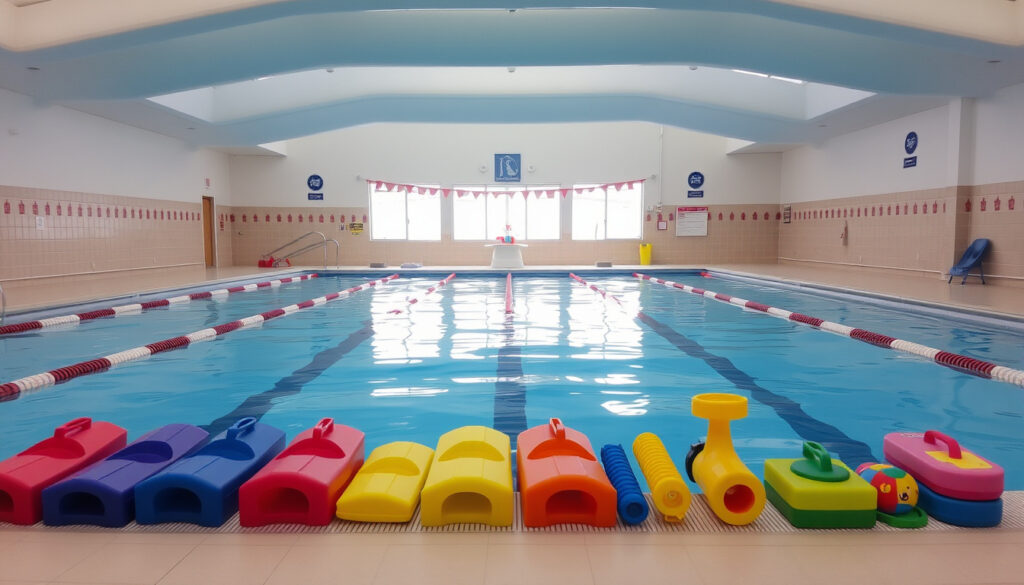
Swimming Classes for 4 Year Olds: What Parents Need to Know
You’ve probably seen the flyers: “Swim lessons for ages 4 and up!” and wondered if your child is ready. The answer is encouraging: with the right approach and realistic expectations, 4-year-olds can learn essential water safety skills that set them up for a lifetime of safe swimming.
Minimum enrollment age: 4 years old (most swim schools) ·
Typical lesson length: 30 minutes ·
Class size: Small groups (4–6 children) ·
Core skills taught: Water safety, floating, and basic stroke introduction
Quick snapshot
- 4-year-olds can start swim lessons and learn basic water safety skills (HealthyChildren.org (AAP))
- Parental involvement and positive reinforcement improve outcomes (HealthyChildren.org (AAP)) (HealthyChildren.org (AAP))
- Regular lessons (weekly or more) accelerate progress (HealthyChildren.org (AAP)) (HealthyChildren.org (AAP))
- Exact timeline for achieving independent swimming varies widely by child
- Long-term impact of early swim training on later athletic ability is not conclusively studied
- Most 4-year-olds need 6–12 months of regular lessons for basic independent swimming (5–10 meters) (HealthyChildren.org (AAP))
- Enroll in a program that matches your child’s comfort level and your schedule — check instructor certifications and class ratios (American Red Cross (water safety authority))
Here’s a quick reference of key facts about swim classes for 4-year-olds.
| Label | Value |
|---|---|
| Minimum enrollment age | 4 years old (most formal group classes) |
| Lesson duration | 30 minutes per session |
| Class size | 4–6 children per instructor |
| Skills focus | Water safety, floating, backstroke, and front paddle |
| Typical cost (term) | Varies by region; expect €40–€60 per term in Ireland |
Should my 4 year old be able to swim?
What are the developmental signs of readiness?
- Comfort in water (splashing, putting face in)
- Ability to follow simple instructions (e.g., “kick your feet”)
- Toilet trained — most swim schools require this for group classes (HealthyChildren.org (AAP))
Typical swimming milestones for a 4 year old
At age 4, most children can learn to blow bubbles, float on their front and back with assistance, and perform a basic paddle. Independent swimming (5–10 meters) typically comes after 6–12 months of regular lessons (HealthyChildren.org (AAP)).
The implication: early readiness assessments help set realistic goals.
Can you teach a 4 year old to swim?
Tips for teaching at home
You can help your child get comfortable in the water even before formal lessons. Start in a safe, supervised environment — the bathtub is a great place to practice blowing bubbles and pouring water over the head. As your child gains confidence, move to a pool where you can practice kicking, floating with support, and reaching for toys (Safe Kids Worldwide (child safety organization)).
Home practice reinforces what your child learns in class and builds a positive association with water. Consistency — short, frequent sessions — matters more than duration.
When to enroll in formal classes
If your child is comfortable in water and can follow instructions, formal group lessons are an excellent next step. The American Academy of Pediatrics recommends that children attend multiple sessions and continue until they master basic water competency skills (HealthyChildren.org (AAP)).
Children should attend multiple sessions and continue until they master basic water competency skills.
— HealthyChildren.org (AAP)
Not every child is ready at exactly 4. If your child is fearful or unwilling, take a step back — pressure can create long‑term anxiety. Try parent‑child classes first or wait a few months.
The catch: readiness varies, so flexibility is key.
Is there a right age for kids to learn how to swim?
AAP recommendations on swim lesson start age
The American Academy of Pediatrics suggests that swim lessons can begin for many children starting at age 1 as a layer of protection against drowning (HealthyChildren.org (AAP)). However, most formal group classes for 4‑year‑olds are structured to match their developmental stage — better motor control, ability to follow instructions, and social readiness.
Benefits of starting at age 4
- Better coordination and strength for stroke development
- Ability to participate in group settings and follow a curriculum
- Reduced drowning risk — CDC (public health agency) notes that formal lessons are a key layer of protection
The implication: While you could start earlier with parent‑child classes, age 4 is the sweet spot for independent‑skill learning in a structured environment.
How long will it take for a 4 year old to learn swimming?
Factors that influence learning speed
- Frequency of lessons — weekly plus practice builds skills faster (HealthyChildren.org (AAP))
- Child’s comfort level and previous water exposure
- Quality of instruction — student‑to‑teacher ratio and instructor certifications
Typical progression by week/term
Most 4‑year‑olds need 6–12 months of regular lessons to achieve basic independent swimming (e.g., 5–10 meters). In the first term (8–12 weeks), children typically learn water safety, floating, and basic kicking. By the second term, they often combine these skills into a forward movement (Swim England (national governing body for swimming)).
Children aged 3–4 can learn basic swimming skills through fun, structured activities.
— Swim England
What this means: consistent practice and patience are the main drivers.
When should children start swimming lessons?
Age guidelines from swim schools
Many swim schools accept children from age 3 or 4 for formal group lessons. At age 4, programs focus on water safety, floating, backstroke, and front paddle. The American Red Cross recommends using multiple layers of protection and ensuring everyone in the family learns to swim well (American Red Cross (water safety authority)).
Signs your child is ready
- Comfortable in water — willing to put face in and not overly anxious
- Follows simple instructions consistently
- Toilet trained (required by most programs)
- Shows interest in water and asks to go swimming
If your child has any medical conditions (asthma, heart issues, ear infections), consult your pediatrician before starting lessons. The Mayo Clinic (medical authority) advises checking with a doctor for individualized guidance.
The pattern: medical clearance ensures safe participation.
Pros and cons of group vs private lessons for 4-year-olds
One choice, two trade‑offs: group lessons build social skills and are more affordable, while private lessons offer individualized attention. Here’s how they stack up.
Upsides
- Group: cheaper (€40–€60 per term vs €55–€540 for private from YMCA of Greater Houston)
- Group: teaches social skills and waiting turns
- Private: focused attention and faster skill acquisition for anxious children
Downsides
- Group: less individualized feedback
- Private: significantly more expensive
- Both: require consistent attendance for best results
The trade-off: choose based on your child’s needs and budget.
How to choose the best swimming class for your 4 year old
Follow these five steps to find a programme that’s safe, effective, and fun for your child.
- Check instructor certifications. Look for instructors with certifications in swim instruction, CPR, and first aid (FuntoSwim (swim school resource)).
- Visit the facility. Observe a class — note the teacher‑to‑student ratio and whether the environment is clean and safe.
- Ask about the curriculum. A good programme emphasises water safety and survival skills, not just stroke technique.
- Consider location and schedule. Consistency matters — choose a class that fits your weekly routine.
- Read reviews and talk to other parents. Word of mouth can reveal how the school handles nervous or reluctant children.
A quality swim programme can transform your 4‑year‑old from water‑wary to water‑confident. The right class makes safety and fun the top priorities.
The upshot: a quality program makes all the difference.
Related reading: Swimming Classes Near Me: Benefits, Timelines & Local Guide · Swimming Classes Near Me: Benefits, Timelines & Local Guide
nrswimteam.org, aquafinswimschool.com, swimlpb.com, hempsteadny.gov, bigblueswimschool.com, safesplash.com, bearpaddle.com
For families considering early water safety, swimming classes for 4 year olds provides detailed guidance on readiness and choosing the right program.
Frequently asked questions
What if my 4 year old is afraid of water?
Start slowly — use a wading pool or bathtub to build comfort. Choose a class with a gentle, patient instructor. Many children outgrow their fear with consistent exposure and positive reinforcement (HealthyChildren.org (AAP)).
Do I need to stay in the water during lessons?
Many group classes for 4‑year‑olds are parent‑participatory initially. Check with the school — some require a parent in the water for the first few sessions to help the child feel secure.
What should I look for in a swim instructor?
Look for formal certifications in swim instruction, CPR, and first aid. Observing a class beforehand can give you a sense of the instructor’s rapport with children (FuntoSwim (swim school resource)).
How can I practice swimming with my 4 year old at home?
In the bathtub, practice blowing bubbles and pouring water over the head. In a shallow pool, practice kicking while holding the edge or your hands. Keep sessions short and fun (Safe Kids Worldwide (child safety organization)).
Is it safe for a 4 year old to swim in a pool with chlorine?
Yes, in properly maintained pools. The AAP recommends that water for young children be heated to 87–94°F to prevent chill. Ensure the pool has proper ventilation and that your child doesn’t swallow pool water (HealthyChildren.org (AAP)).
My 4 year old has a medical condition – what precautions should I take?
Consult your pediatrician before starting lessons. Some conditions (asthma, ear infections, heart problems) may require special precautions. The Mayo Clinic (medical authority) advises getting medical clearance first.
How do I know if a swim school is reputable?
Check for certified instructors, a clear safety policy, small class sizes (4–6 students per instructor), and positive reviews from other parents. Visit the facility and observe a class before enrolling.
Drowning remains a leading cause of death among young children. For parents in Ireland, where swimming is a beloved pastime but pools can be crowded, enrolling your 4‑year‑old in a quality swim programme is one of the most effective steps you can take toward water safety. The choice is clear: invest in lessons now, or risk a preventable tragedy later.
More related posts
 Atlanta Hawks vs Lakers Match Player Stats: Box Score
 Haley Lu Richardson Movies & TV Shows: Full Filmography
 How to Get Rid of a Sore Throat Fast: Home Remedies & Relief
 Why Is Taylor Swift So Popular? Key Reasons Explained
 Best All Inclusive Resorts in Florida: Top 10 List
 Gift Tax Limit 2024 Ireland: How Much Can You Gift
 Under the Sea Lyrics: Full Text, Meaning & History
 Delta Flight 2417 Ceiling Collapse: Passengers Hold Panel Mid-Flight